Visual Prompts and Styles: How to Convey an Idea Through Example
Free access to Chat GPT and other neural networks
 Open Chat →


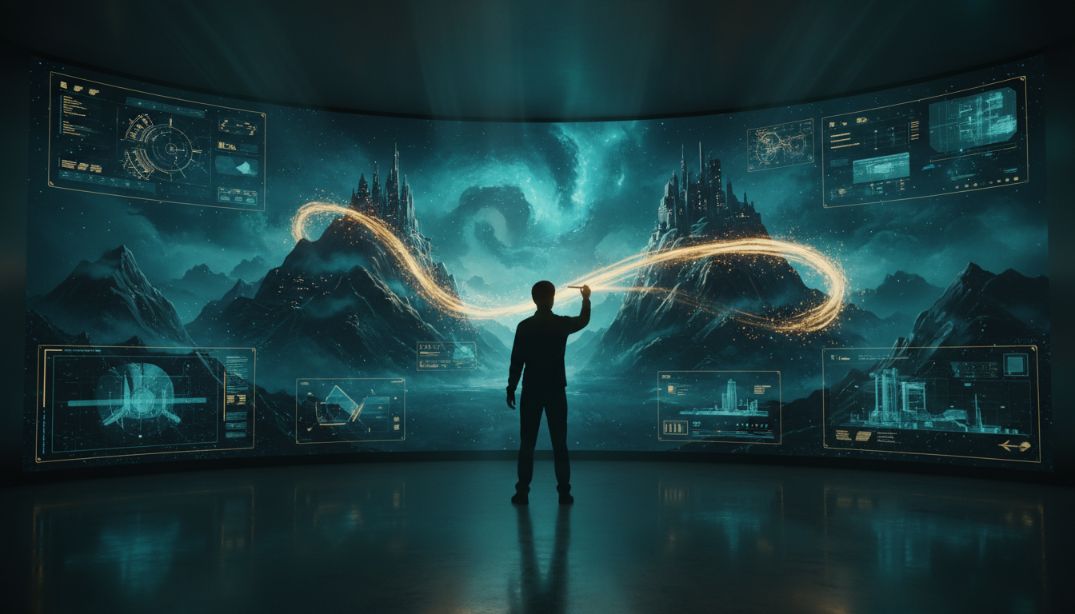
Magnet Words: How to Get a Neural Network to Draw Exactly What You Imagine?
Neural networks create graphics based on text descriptions, transforming words into detailed images. To achieve a high-quality result, the user must formulate a well-designed technical request that takes into account composition, lighting, and artistic style. This process opens up new possibilities for designers, marketers, and content creators, allowing them to visualize ideas in seconds without the need for complex graphics editors.
What is a prompt?
In generative art, a prompt is a text instruction understood by a neural network. It serves as a bridge between human ideas and machine code, translating abstract images into concrete pixels. The accuracy of the wording directly affects how well the image will meet your expectations and the technical specifications.
Working with algorithms requires an understanding of their logic and structure. In professional circles, it’s common to identify several key components of an effective query:
- the main object or scene you’re creating
- the artistic style and direction (e.g., surrealism or cyberpunk)
- lighting, color, and depth of field parameters
- technical settings for resolution and aspect ratio
Types and Examples of Prompts
There are various approaches to formulating prompts depending on the desired aesthetic and the complexity of the task. Specialists often combine text descriptions with word weight parameters to highlight the most important elements of the composition. A well-chosen visual image is formed based on a clear hierarchy of concepts in the text.
When creating neural illustrations, we distinguish the following types of instructions:
- Descriptive prompts. You simply list objects, actions, and environments, separated by commas.
- Stylistic commands. The names of famous artists or the names of techniques, such as impressionism, are added to the text.
- Negative prompts. This is a list of elements that the neural network should exclude from the frame, such as distortions or unnecessary details.
- Structural templates. These define a specific angle, lens type, and rendering settings for photorealism.
For example, visual prompts for a logo will differ greatly from those for a landscape. In the former case, simplicity and a vector style are essential, while in the latter, an abundance of detail and play of light are key. Experimenting with word order allows you to change the result, shifting the AI’s focus from the background to the main object.
Prompt Writing Rules
High-quality image creation begins with understanding that the algorithm treats each word as a separate token (the smallest unit of information the model recognizes). The first words in a sentence have the highest priority, so the most important words should be listed first. Experience shows that redundancy often harms quality, so it’s better to use precise nouns and adjectives instead of long introductory phrases.
To write an effective prompt, adhere to the following guidelines:
- Use English, as most models, including midjourney and stable diffusion, were trained primarily on English-language databases;
- Avoid ambiguities and abstract concepts that are difficult to interpret visually;
- Specify specific materials and textures to add realism to objects;
- Include technical camera parameters, such as 8K, Unreal Engine 5, or Ray Tracing;
- Describe mood and atmosphere through color palette and lighting type.
Each new request should be a logical continuation of the previous one if you’re using an iterative approach. Changing just one word can dramatically alter the lighting or pose of a character. This allows you to gradually refine the image to perfection without rewriting the entire instructions.
Where and how to use
Visual content automation is finding applications across a wide range of industries. Companies are implementing neural networks to generate advertising creatives and concept art. This helps reduce pre-production time and quickly test various design hypotheses without hiring in-house illustrators.
The chataibot.pro website features a user-friendly interface for working with leading graphic models. We provide access to modern generation tools without the need for complex software setup or expensive equipment. Users can enter a predefined text query and instantly receive high-quality visual content in a single window.
chataibot.pro allows you to effectively harness the power of artificial intelligence to solve business problems. You can generate unique illustrations for blogs, design presentations, or create realistic product mockups. The intuitive platform ensures stable operation and high data processing speed, even with complex queries.
Errors and their solutions
One of the main challenges when working with AI is the mismatch between expectations and reality due to overly general wording. For example, the query “beautiful picture” doesn’t provide the algorithm with any specifics, leading to unpredictable results. A solution is a detailed description of the composition, including the genre and technique.
Displaying fine details, such as hands or complex inscriptions, is often difficult. Experienced specialists note that using negative words in the negative prompt field helps reduce artifacts. If you’re not satisfied with the result, try changing the style to a simpler one or adding a specific lighting example to the text.
Checking for logical inconsistencies is an important step before finalizing your work. It’s important to remember that generated images may contain errors in anatomy or perspective. In such cases, it’s recommended to use partial redrawing tools (Inpaint) or modify prompts to refine the spatial position of objects. Continuously exploring new parameters and features helps minimize errors and achieve a high level of mastery in digital art creation.
If you want to optimize your graphics creation process and gain access to cutting-edge generation technologies, start working with professional tools. Learn more about our services at chataibot.pro and see how quickly and easily you can transform ideas into high-quality visuals.
Free access to Chat GPT and other neural networks
Open Chat →