ChatGPT 2026


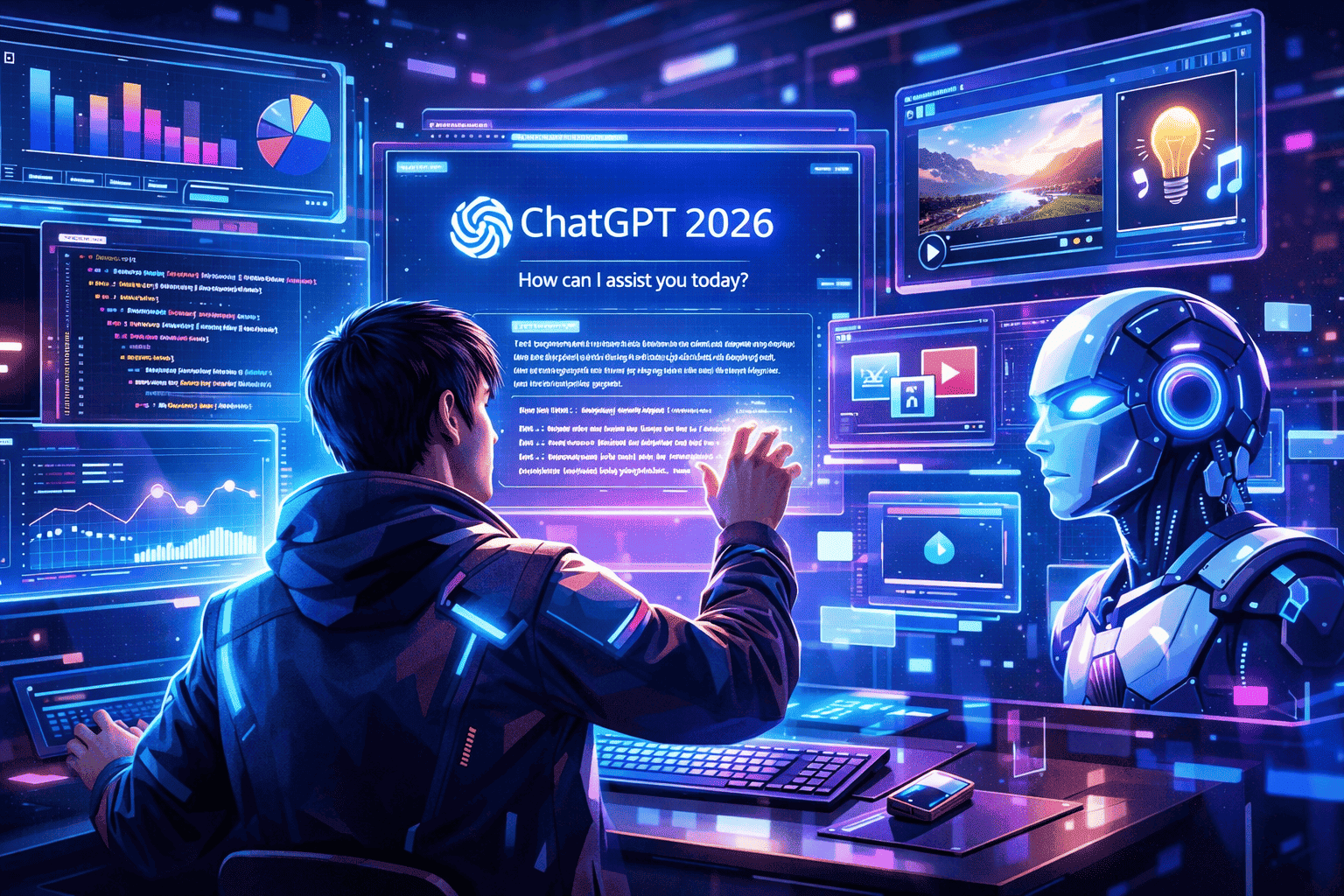
Evolution of Neural Networks: New Features for ChatGPT in 2026
ChatGPT continues to evolve as one of the leading AI-powered language assistants. OpenAI’s model regularly receives updates, expanding its functionality for users worldwide. By 2026, OpenAI plans to release versions with improved context processing.
Understanding the future development of GPT technologies helps plan the tool’s integration into workflows. In this article, we’ll explore projected improvements, practical use cases, and realistic limitations to be aware of when working with language models.
Try ChatGPT for free
Sign up for ChatAIBot and get access to GPT, Gemini, Claude, and other leading AI models
Open ChatGPT →New Features for ChatGPT in 2026
Language systems are evolving toward increasing the context window and improving the understanding of multi-step instructions. Next-generation GPT systems will be able to process longer dialogues without losing logical coherence. This is critical for tasks that require analyzing large documents or supporting complex multi-step workflows.
Developers will enhance multimodal functionality. The chat interface will be able to simultaneously process images, audio, and text within a single request. This approach simplifies the creation of complex content without switching between different services. The neural network will learn to better recognize context from visual information and provide responses based on combined data.
We expect the model to improve its reasoning. Artificial intelligence will become more effective at handling tasks that require step-by-step analysis and a structured approach to problem solving.
We’ve compiled up-to-date instructions for using ChatGPT and other AI tools at chataibot.pro. The platform provides subscription access to a library of optimized prompts that help you effectively leverage the power of language models for text generation, data analysis, and automation of routine professional tasks.
Where to Use ChatGPT in 2026
The language model’s versatility makes it applicable across a variety of professional fields. From customer support automation to educational content creation, the range of applications expands with each version update.
Main areas of ChatGPT use in 2026:
-
Content marketing — generating articles, product descriptions, and video scripts, adapting texts for different platforms and audiences.
-
Analytics — processing large volumes of text data, identifying trends, and creating reports based on structured information.
-
Education — personalized educational materials, explaining complex concepts, and creating interactive assignments for students.
-
Programming — writing code in different languages, debugging existing solutions, and automatically documenting projects.
-
Customer service — a bot for answering common questions while maintaining the context of the conversation and providing a personalized approach.
-
Translation and localization — adapting content for different markets, including correct handling of the Russian language and regional specifics.
The effectiveness of the application directly depends on the quality of the query formulation. Clear instructions specifying the context, role, and desired format yield predictable results when working with the chat interface.
Examples of advanced prompts for the 2026 version
Compose complex neural network commands using multi-step instructions with clear definitions of roles, context, and constraints. Example for creating an analytical report: “You are a marketing analyst with experience in e-commerce. Analyze the attached quarterly sales data. Identify three key trends. For each trend, provide a reason and a practical recommendation. Format: table with columns “Trend,” “Reason,” and “Recommendation.” Length: up to 500 words, written in a businesslike style.” For code generation, a structured description of the technology stack and requirements is effective: “Write a Python function to parse a CSV file with customer data. Input: file path. Output: list of dictionaries with field validation. Handle exceptions for missing files and invalid data formats. Add detailed docstrings and type hints for all parameters.”
When working with content: “Create an article structure about AI technology trends for a professional audience. Target audience: IT specialists and digital project managers. The tone is expert yet accessible. Structure: introduction, 4 sections with examples, a brief conclusion. Each section is 2-3 paragraphs long.”
chataibot.pro offers a collection of proven templates for working with ChatGPT and other AI assistants. A subscription unlocks access to a catalog of prompts adapted for specific tasks—from content creation to technical documentation—which significantly accelerates the delivery of high-quality results from language models and minimizes the need for repeated refinements.
What not to expect
Despite technological advances, language systems retain structural limitations. Neural networks generate text based on statistical patterns and training data, rather than a true understanding of the subject matter or real-world experience.
Key limitations when working with a chat interface:
- Lack of access to up-to-date data after the model’s training completion date without specialized integration tools;
- Inability to perform actions outside of the text environment without additional APIs (sending email, managing external systems);
- Tendency to generate plausible-sounding but factually incorrect statements, especially in highly specialized fields;
- Limitations when working with tasks requiring real-world experience or up-to-date data from a specific region;
- Difficulty understanding subtle cultural nuances and context specific to individual markets, including Russia.
The model remains a tool that requires critical evaluation of the answers it provides. For tasks where the cost of error is high—medicine, law, finance—results must be verified by a qualified specialist.
When will the new versions be available?
OpenAI releases major updates at intervals of several months, gradually expanding access to different user categories. Exact release dates are usually not announced in advance. Availability of new versions depends on the geographic region, subscription type, and technical capabilities of the infrastructure.
For users in Russia, access to OpenAI services may be limited due to regional policies and technical barriers. Alternative solutions include using VPN services, working through aggregator platforms that provide an interface to the Chat API, or switching to local equivalents with Russian language support.
It’s worth keeping in mind that advanced features are often first available to paid subscribers and then gradually made available to free users. Enterprise clients typically receive early access to new features through specialized programs.
At chataibot.pro, we regularly update information about available AI tools and practical ways to use them. The platform provides subscription access not only to ChatGPT but also to alternative language models, including solutions with high-quality Russian language support, which is especially relevant for users in regions with limited access to international services and specific localization requirements.
The evolution of artificial intelligence in natural language processing opens up new opportunities for automation, creativity, and increased productivity. Understanding ChatGPT’s current capabilities and realistic limitations allows you to effectively integrate the tool into your workflows, avoiding unrealistic expectations and maximizing the practical benefits of using the technology. Learn more about our services at chataibot.pro and gain access to a professional library of prompts for ChatGPT and other AI platforms, which will greatly accelerate your work with language models, neural networks, and modern AI tools.